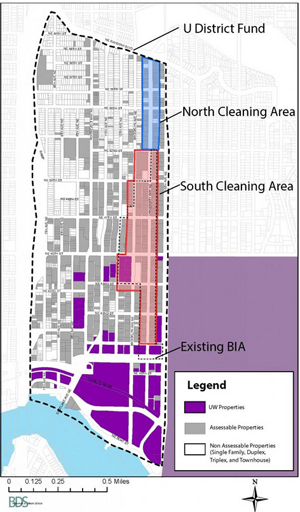
The extent of the proposed UDP-BIA is shown in the accompanying figure. Note that the UDP-BIA is much larger than the typical BIA (including the existing University district BIA which more closely ties its varying assessment rates to benefits provided) extent of a block or two on either on each side of the major business strip. This organization is in keeping with the State Statute that requires boundaries to be set tightly around the improvement area. Thus the large extent of the UDP-BIA violates both the spirit and letter of the law. For instance, the current UDP-BIA boundaries include small businesses located on Roosevelt Way that are far away from the Ave (a.k.a. University Way) commercial district where most of the benefits from the BIA would occur. The business models, residential make up, and concerns of Roosevelt neighborhood are significantly different from those found on the Ave. These incongruities result in four particularly glaring problems with the UDP-BIA for the Roosevelt neighborhood:
For example, since the BIA will spend more on cleanup activities on the AVE then it collects in fees struggling small business and families in the Roosevelt neighborhood would subsidize cleanup activities on the AVE with their tax dollars. The funding formula is unfair because the tax burden is not reasonably tied to benefits. This is especial true for families that live in condominiums. In addition, the overall BIA proposal is unfair since the vast majority of Roosevelt Way small business had no knowledge of or input into the proposal, and did not vote to approve it. Many of those few Roosevelt small businesses that did have some knowledge of the BIA (e.g. Hardwick & Sons hardware) expressed the fear that the BIA would encourage activates that would be detrimental to their businesses. This lack of trust in the BIA is not necessary surprising given that many of the descriptions for the various line items in the BIA budget are vague with too few measurable benefits. Most importantly the BIA does not address traffic, bike lane complications, and parking issues that directly impact small business on Roosevelt in crucial ways. In addition, some supposed benefits could be harmful to Roosevelt businesses. For instance, the neighborhood marketing appears to simply fund a lobbyist to work City Hall to up-zone the neighborhood and dramatically increase the value of the landholdings of a small group of AVE landowners.
The BIA is particularly harmful to those small businesses that are run by people whose native language is not English. These hardworking people were ill equipped to deal with the surreptitious nature of UDP-BIA promotion activities or deal with the harmful ramifications hidden in the fine print of the UDP-BIA.